
Table of Contents
- What Is Sterling Silver and Why Does It Matter for Jewelry?
- Sterling Silver vs. Fine Silver: Understanding the Key Differences
- Durability and Everyday Wear: Why 925 Sterling Silver Holds Up
- Is Sterling Silver Hypoallergenic? What to Know About Skin Sensitivity
- Sterling Silver vs. Gold Plated Jewelry: Which Lasts Longer?
- How to Clean Sterling Silver Jewelry and Prevent Tarnish
- Investment vs. Fashion Value: Why Sterling Silver Makes Sense
- Frequently Asked Questions
Last Updated: September 14, 2026
What Is Sterling Silver and Why Does It Matter for Jewelry?
Sterling silver is a precious metal alloy made of 92.5% pure silver and 7.5% other metals, usually copper (Buying Platinum, Gold, and Silver Jewelry). That composition gives it the perfect balance of beauty and strength for jewelry that gets worn daily. This is why the "925" stamp appears on quality pieces, and why so many people ask why choose sterling silver for jewelry over cheaper alternatives.
At Gemma Azzurro, we craft our Mediterranean-inspired evil eye and hamsa designs from high-quality sterling silver because it holds up to real life. It resists the bending and scratching that ruins softer metals, keeps its bright luster with basic care, and costs far less than gold or platinum.

If you've ever watched a favorite necklace turn green or snap at the clasp, you already understand the stakes. The metal you choose decides whether a piece lasts months or decades.
Sterling Silver vs. Fine Silver: Understanding the Key Differences
Fine silver is 99.9% pure silver, while sterling silver is 92.5% pure silver blended with other metals. That single difference explains almost everything about how each behaves in jewelry.
Fine silver is softer and more malleable. It tarnishes more slowly, but it dents and scratches easily, which makes it a poor choice for rings or bracelets that take daily abuse. Sterling silver trades a little purity for far more tensile strength, so it keeps its shape through years of wear.
Federal Trade Commission guidance on jewelry marketing and precious metal claims requires accurate disclosure of precious metal content, which is why reputable sellers stamp their pieces with a hallmark like "925" or "Sterling."
The Role of Copper in 925 Sterling Silver
Copper is the workhorse behind sterling silver's durability. It hardens the alloy, giving the metal the tensile strength that pure silver lacks. The trade-off is that copper reacts with sulfur in the air, which is the root cause of tarnish. Understanding this helps you care for your pieces better, and it's a key reason sterling silver is the standard for jewelry making worldwide.
Durability and Everyday Wear: Why 925 Sterling Silver Holds Up
925 sterling silver holds up to everyday wear because the copper in the alloy gives it the strength to resist bending, denting, and scratching. You can shower, work, and move through your day without babying a sterling silver piece the way you would fine silver.
A common mistake is assuming all silver jewelry is fragile. It isn't. The pieces that fall apart are usually thin, hollow, or made from base metal with a silver coating that wears through.
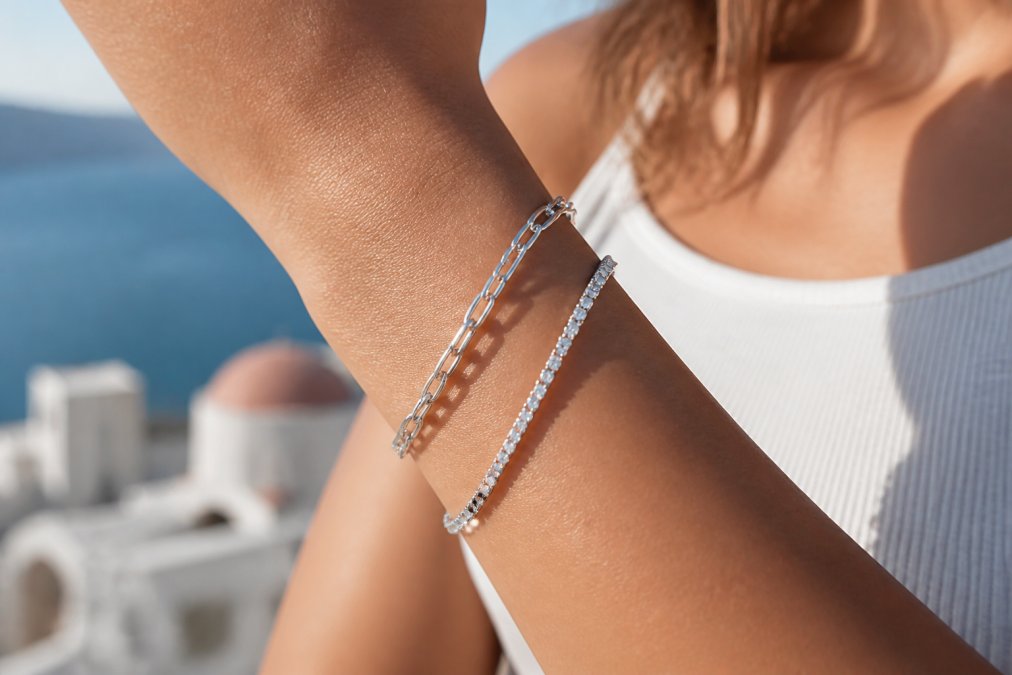
Look for solid construction and a proper hallmark. Our sterling silver chain link bracelets are hand-crafted from 925 sterling silver and zirconia stones, built for the kind of daily wear that destroys cheaper pieces.

Is Sterling Silver Hypoallergenic? What to Know About Skin Sensitivity
Sterling silver is usually a safe choice for sensitive skin, but "usually" is doing a lot of work in that sentence. The honest answer is that reactions to sterling silver are almost never caused by the silver itself. They are caused by the 7.5% of the alloy that isn't silver, and the metal most likely to trigger a reaction is nickel.
Nickel is one of the most common contact allergens in the world (the CDC). It shows up in costume jewelry, watch backs, belt buckles, eyeglass frames, and, in lower-cost silver alloys, sometimes in the copper portion of sterling silver. If your skin reacts to cheap earrings but not to a well-made sterling silver ring, nickel is the likely reason.
Why the 7.5% Matters More Than the 92.5%
Two pieces can both be stamped "925" and behave completely differently on your skin. The difference is what the maker used for the remaining 7.5%:
- Nickel-bearing alloys, cheaper to produce, more likely to release nickel ions when they meet sweat, and the usual culprit behind itchy earlobes and red wrists.
- Nickel-free alloys, copper, zinc, or a small amount of germanium or silicon, chosen specifically to avoid the allergen.
Most reputable jewelry makers in the U.S. now formulate sterling silver to be nickel-free, but "nickel-free" is a marketing claim, not a regulated term. If you have a known nickel allergy, ask the seller directly and look for a written statement rather than assuming the 925 stamp guarantees it.
The Green Mark Is Not an Allergy
That dark or greenish smudge on your skin after wearing silver is not a nickel reaction. It's a harmless chemical reaction between the copper in the alloy and the acids and salts in your sweat. It washes off with soap and water, and it's more common in humid weather or when you've been sweating. A true allergy looks different: redness, raised bumps, itching, or a rash that appears within hours and lingers.
How to Test a Piece Before You Commit
If your skin is reactive, a few practical steps reduce the risk:
- Ask about nickel content in writing. A maker who knows their alloy can answer this directly.
- Patch-test new earrings. Wear them for a few hours before a full day.
- Seal the metal if needed. A jeweler can apply a thin rhodium or clear lacquer coating to create a barrier between the alloy and your skin.
- Avoid plated base metals. Gold-plated and rhodium-plated costume pieces often hide a nickel-bearing brass or steel core under the plating, and once the plating wears, the nickel is exposed.
Sterling Silver vs. Gold Plated Jewelry: Which Lasts Longer?
Sterling silver outlasts gold plated jewelry in almost every everyday-wear scenario. Gold plating is a thin layer of gold over a base metal, and that layer wears away with friction, sweat, and cleaning.
Here's the practical breakdown:
| Feature | Sterling Silver | Gold Plated |
|---|---|---|
| Base material | 92.5% solid silver | Base metal with thin gold layer |
| Lifespan with daily wear | Years to decades | Months to a few years |
| Tarnish risk | Tarnishes, easily polished | Plating wears, base may discolor |
| Skin sensitivity | Usually nickel-free | Depends on base metal |
| Repairability | Can be polished and resized | Plating cannot be restored easily |
Gold plated pieces can look stunning and cost less upfront, but the plating is the weak point. Once it thins, the base metal shows through. Sterling silver, by contrast, is the same metal all the way through, so polishing restores it again and again.
How to Clean Sterling Silver Jewelry and Prevent Tarnish
The fastest way to clean sterling silver jewelry is a soft cloth and mild soap, followed by thorough drying. For heavier tarnish, a silver polishing cloth or a baking soda paste lifts oxidation without scratching the surface.
A simple routine keeps pieces bright:
- Wipe jewelry with a soft cloth after each wear to remove oils and sweat.
- Wash weekly with warm water and a drop of mild dish soap.
- Dry completely with a lint-free cloth before storing.
- Store in an airtight bag or lined box away from humidity.
- Polish with a silver cloth when you notice dullness.
Tarnish Prevention Science: Why Oxidation Happens
Tarnish is oxidation, and it happens when silver meets sulfur compounds in the air. The copper in sterling silver speeds this up, which is why sterling tarnishes faster than fine silver. The fix isn't avoiding sterling silver; it's controlling exposure. Anti-tarnish strips, airtight storage, and keeping pieces away from rubber bands and wool all slow the reaction. Rhodium plating is another option some jewelers use to add a tarnish-resistant barrier.
Investment vs. Fashion Value: Why Sterling Silver Makes Sense
Sterling silver sits in a sweet spot between investment and fashion. It's a precious metal with real intrinsic value, yet it costs a fraction of gold or platinum, so you get genuine quality without the premium price tag.
That affordability means you can build a versatile collection: a piece for the office, one for evenings, another for the gym bag. Where gold forces you to choose one hero piece, sterling silver lets you own several.
It's also repairable. Sterling silver rings can be resized and polished, and a good jeweler can restore pieces that look worn. Costume jewelry gets thrown away; sterling silver gets fixed.
Our sterling silver 5 mm round cut eternity band is a good example of the value equation: solid 925 sterling silver with round-cut cubic zirconia, built for everyday wear and travel at a price that doesn't require a special occasion.
Choosing jewelry that survives real life, not just the display case, comes down to the metal. Sterling silver gives you durability, hypoallergenic comfort, and timeless beauty at a price that makes sense for everyday wear. Gemma Azzurro crafts Mediterranean-inspired sterling silver and gold-plated pieces with vibrant evil eye and hamsa designs, backed by a 14-day money-back guarantee, free shipping on orders over $150, and a 10% discount for newsletter sign-ups. Get started with Gemma Azzurro and find jewelry built to last.
Frequently Asked Questions
What are the downsides of sterling silver?
Sterling silver can tarnish over time when exposed to air, moisture, and chemicals, forming a dark patina. It is also softer than gold or platinum, so it may scratch with rough daily wear. However, regular cleaning with a polishing cloth and proper storage can prevent tarnish, and the 925 alloy with copper provides enough durability for everyday jewelry like bracelets and rings. Many people find these minor trade-offs worth it for the affordability and luster.
Is there a difference between 925 silver and sterling silver?
No, 925 silver and sterling silver are the same thing. The number 925 refers to the purity standard: 92.5% pure silver mixed with 7.5% other metals, usually copper. This alloy is what gives sterling silver its strength for jewelry making. When you see a 925 stamp or hallmark on a piece, it confirms the metal meets this standard. Both terms are used interchangeably in the jewelry industry.
How does sterling silver compare to gold-plated jewelry in terms of durability?
Sterling silver is solid 925 silver throughout, so it can be polished and restored even if it tarnishes. Gold-plated jewelry has a thin layer of gold over a base metal like brass or copper; that plating can wear off with frequent wear, exposing the metal underneath. For everyday pieces like rings and bracelets, sterling silver typically outlasts gold plating. However, gold-plated pieces may resist tarnish better initially. The best choice depends on how often you wear the item and whether you prefer solid metal or a gold color.
Does sterling silver tarnish easily?
Sterling silver tarnishes when it reacts with sulfur compounds in the air, moisture, and everyday chemicals like perfume or lotion. The copper in the alloy speeds up this oxidation. Tarnish appears as a dark film or patina. You can slow it by storing pieces in airtight bags with anti-tarnish strips, removing jewelry before swimming or showering, and wiping with a soft cloth after wear. Regular cleaning with a silver polishing cloth or mild soap and water keeps the luster intact.
What type of silver is best for jewelry?
Sterling silver (925) is the best choice for most jewelry because it balances purity, durability, and cost. Fine silver (99.9%) is too soft for everyday wear and scratches easily. Sterling silver's copper alloy adds strength for clasps, chains, and rings. It also takes rhodium plating well for extra tarnish resistance. For pieces worn daily, look for a 925 hallmark and consider rhodium-finished options. Gemma Azzurro's sterling silver collection uses 925 silver for lasting wear.


