
Table of Contents
- Why Does Sterling Silver Tarnish?
- Best Storage for Sterling Silver Jewelry
- How to Clean Sterling Silver Jewelry at Home
- Does Sterling Silver Tarnish in Water?
- Daily Wear Habits That Slow Tarnishing
- Chemicals and Substances to Avoid
- Long-Term Storage Tips for Sterling Silver
- Conclusion
Last Updated: August 21, 2026
Why Does Sterling Silver Tarnish?
Sterling silver tarnishes because of a natural chemical reaction between the metal and sulfur compounds in the air, moisture, and certain substances. When silver comes into contact with hydrogen sulfide or other sulfides, a dark layer forms on the surface. This isn't rust, it's oxidation, a process that happens faster in humid environments and around certain chemicals.

Understanding why tarnishing occurs is the first step toward prevention. Sterling silver is an alloy, typically 92.5% pure silver mixed with other metals like copper to increase durability (the FTC). The copper content is what reacts most readily with sulfur in the air. This is why pure silver tarnishes more slowly than sterling silver, but sterling silver remains the preferred choice for jewelry because of its strength and affordability.
The tarnishing process accelerates when silver is exposed to moisture, humidity, air pollution, perfumes, lotions, and even sweat from your skin. Each of these factors introduces sulfides or creates conditions where oxidation speeds up. The good news is that tarnishing is entirely preventable with proper storage and care, and unlike rust, tarnish can be removed without damaging the metal.
Best Storage for Sterling Silver Jewelry
The most effective way to prevent sterling silver jewelry from tarnishing is to store it in an airtight, low-humidity environment. Oxygen and moisture are the enemies. When you eliminate these, tarnishing nearly stops.
Airtight Containers and Ziplock Bags
Airtight storage is non-negotiable for long-term sterling silver protection. Ziplock bags work exceptionally well because they create a sealed environment that blocks sulfur compounds and moisture from reaching the metal. Here's how to store sterling silver jewelry properly:
Remove as much air as possible before sealing the bag. Press out excess air gently, don't crush delicate pieces. Label the bag with the contents and date so you know what's inside without opening it repeatedly. For pieces you wear often, a smaller ziplock bag keeps them separate from long-term storage items.
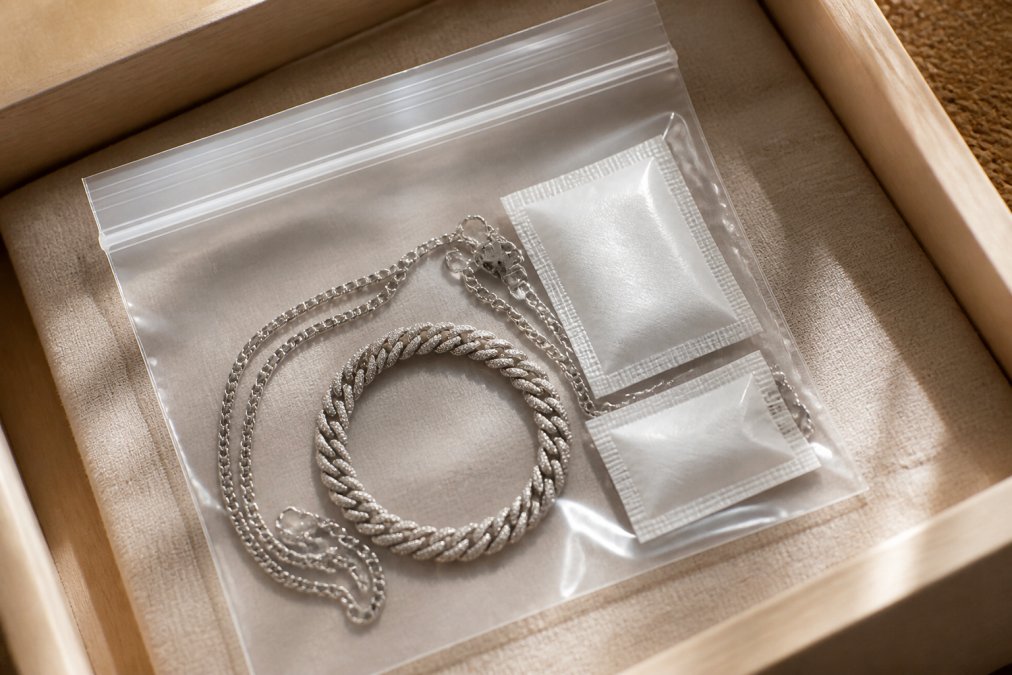
Jewelry boxes designed specifically for silver storage often include anti-tarnish lining, but a simple ziplock bag with silica gel packets works just as well and costs far less. The key is creating a barrier between your sterling silver and the outside air.
Using Silica Gel and Anti-Tarnish Products
Silica gel packets absorb moisture inside sealed storage containers. They're inexpensive, reusable, and dramatically extend the time before tarnishing begins. Place one or two packets in your ziplock bag or jewelry box alongside your sterling silver pieces.
Anti-tarnish tabs and strips contain reactive compounds that capture sulfur before it can oxidize the silver. These products work by absorbing hydrogen sulfide from the air inside your storage container. They're particularly useful for pieces you store for months at a time. Replace them annually or when they darken, which signals they've absorbed their maximum sulfur capacity.
Some people use chalk or activated charcoal as natural alternatives to commercial anti-tarnish products. These work by absorbing moisture and some sulfur compounds, though they're less effective than dedicated anti-tarnish tabs. If you choose these options, wrap them in a small cloth so particles don't settle on your jewelry.
How to Clean Sterling Silver Jewelry at Home
Even with perfect storage and prevention habits, some tarnish will eventually develop. Fortunately, cleaning sterling silver jewelry at home is straightforward and requires only common household items.
Gentle Cleaning Solutions You Can Make
The gentlest and most effective homemade cleaner uses baking soda and water. Mix three parts baking soda with one part water to create a paste. Apply the paste to a soft cloth and gently rub your sterling silver jewelry in circular motions. Rinse thoroughly under lukewarm running water and dry immediately with a soft, lint-free cloth. This method removes tarnish without scratching the metal.
For heavier tarnish, try the aluminum foil method. Line a bowl with aluminum foil, add hot water and a tablespoon of baking soda, and place your sterling silver pieces in the solution. The chemical reaction between the foil and baking soda lifts tarnish from the silver. Leave pieces in the solution for 5-10 minutes, then rinse and dry carefully. This method works remarkably well but requires attention, don't leave jewelry soaking for extended periods.
White vinegar mixed with baking soda creates another effective paste. The acidity of vinegar helps dissolve tarnish while baking soda provides gentle abrasive action. Apply the paste, let it sit for 5 minutes, then scrub gently with a soft cloth. Rinse thoroughly and dry immediately.
Never use harsh abrasive powders, steel wool, or aggressive scrubbing techniques. These damage the surface of sterling silver and can create scratches that accelerate future tarnishing. Always use soft cloths and gentle circular motions.
When to Seek Professional Cleaning
Professional jewelers have access to ultrasonic cleaners and specialized solutions that remove tarnish more thoroughly than home methods. Consider professional cleaning if your jewelry has intricate details, gemstones that might be damaged by water or vinegar, or if home cleaning hasn't fully restored the shine.
Pieces from Gemma Azzurro featuring delicate evil eye designs or hamsa pendants with multiple layers may benefit from professional cleaning because the detailed work can require careful handling. A professional cleaner can access crevices that are difficult to reach at home.

Does Sterling Silver Tarnish in Water?
Sterling silver will tarnish in water, especially saltwater or chlorinated water. Fresh water causes slower tarnishing than salt or chlorine, but it still introduces moisture that accelerates oxidation. If you wear sterling silver jewelry in the shower or while swimming, you're actively speeding up the tarnishing process.
The combination of water and air creates ideal conditions for sulfur compounds to react with silver. Saltwater is particularly harsh because salt accelerates the oxidation reaction. Chlorinated water from pools and hot tubs is also damaging because chlorine is a reactive chemical that corrodes sterling silver.
Remove your sterling silver jewelry before showering, swimming, or water sports. Dry your skin thoroughly before putting jewelry back on. If your jewelry gets wet, dry it immediately with a soft cloth. This simple habit prevents significant tarnishing over time.
Daily Wear Habits That Slow Tarnishing
How you wear your sterling silver jewelry throughout the day affects how quickly it tarnishes. Certain habits create a protective routine that slows oxidation.
Put on your jewelry last, after applying perfume, lotions, and cosmetics. These products contain chemicals and oils that react with sterling silver and accelerate tarnishing. Once everything else is on your skin, add your jewelry. This simple timing change makes a measurable difference.
Wear your sterling silver pieces regularly if possible. Skin oils provide a slight protective barrier that slows tarnishing. Jewelry worn daily tarnishes more slowly than pieces stored away for months. This doesn't mean you should wear the same piece constantly, rotate your collection so each piece gets regular wear.

Avoid touching your jewelry with wet hands. Moisture accelerates tarnishing, so dry your hands completely before adjusting or wearing your pieces. This is especially important if you've been washing dishes or your hands have been in water.
Keep your jewelry away from direct heat sources and extreme temperature changes. Store pieces in a cool, stable environment, not near radiators, air conditioning vents, or windows where temperature fluctuates. Stability in temperature and humidity slows the oxidation process.
Chemicals and Substances to Avoid
Certain everyday substances dramatically accelerate tarnishing. Knowing which ones to avoid protects your sterling silver jewelry.
Perfumes and colognes contain alcohol and chemical compounds that corrode sterling silver. Apply these before putting on your jewelry, and allow them to dry completely. The same applies to hairspray, which contains alcohol and other chemicals. Lotions and sunscreen also react with silver, so apply these first and let them set before wearing your pieces.
Chlorine and salt water are particularly damaging. Avoid wearing sterling silver jewelry while swimming, showering, or using hot tubs. Chlorine is a strong oxidizing agent that accelerates corrosion (peer-reviewed research). Salt water compounds the problem by introducing ionic compounds that speed up the chemical reaction.
Harsh cleaning products, bleach, and ammonia-based cleaners will damage sterling silver. Never use these to clean your jewelry. If these products splash on your jewelry while you're cleaning, rinse immediately with fresh water and dry thoroughly.
Sweat contains salts and acids that react with sterling silver. This is particularly relevant if you wear jewelry during exercise. Shower and dry off before putting your jewelry back on. If you prefer to wear jewelry while working out, choose pieces you don't mind tarnishing, and clean them more frequently.
Some people experience faster tarnishing due to their skin chemistry. Acidic skin pH and higher salt content in sweat can accelerate oxidation. If you notice your sterling silver tarnishes quickly despite proper care, this might be the reason. In these cases, wearing pieces less frequently during active periods and storing them carefully between wears helps.
Long-Term Storage Tips for Sterling Silver
Storing sterling silver jewelry for extended periods requires specific conditions to prevent tarnishing. Whether you're storing seasonal pieces or heirloom jewelry you wear rarely, these guidelines ensure your pieces stay beautiful.
Store sterling silver jewelry in a cool, dry place with stable temperature and humidity. A bedroom closet or drawer works better than a bathroom, where moisture levels fluctuate constantly. Avoid basements or attics where humidity and temperature vary seasonally. The ideal storage temperature is between 60-70°F with humidity below 40% (si.edu).
Use airtight containers exclusively for long-term storage. Ziplock bags work well, but dedicated jewelry boxes with airtight seals are even better. Include silica gel packets to absorb any moisture that might be trapped in the container. Replace silica gel packets every six months if the container is sealed long-term.
Wrap individual pieces in acid-free tissue paper before placing them in the airtight container. This adds an extra barrier against tarnish and prevents pieces from scratching each other. Avoid regular tissue paper, which can be acidic and damage the silver over time.
Store pieces separately if possible. Chains tangled with bracelets or rings scratched by other pieces create damage that's difficult to repair. Use small compartments or separate bags for each item.
Check your stored jewelry every 3-6 months. Even in ideal storage conditions, some tarnish may develop. A quick inspection lets you catch any issues early and clean pieces before heavy tarnish builds up. This also gives you an opportunity to refresh silica gel packets if they've absorbed significant moisture.
For pieces you won't wear for a year or longer, consider having them professionally cleaned and stored. Some jewelers offer long-term storage services with climate control and anti-tarnish protection. This is particularly worthwhile for valuable pieces or heirloom jewelry.
Gemma Azzurro's sterling silver jewelry, including pieces like the Best Selling Sterling Silver Chain Link Bracelets, is crafted for long-lasting durability and everyday wear. With proper storage and care following these guidelines, your pieces will maintain their vibrant shine for years. The hand-crafted quality means your investment in beautiful sterling silver jewelry pays off through consistent, reliable performance.
Conclusion
Preventing sterling silver jewelry from tarnishing comes down to controlling three factors: moisture, air exposure, and chemical contact. Store your pieces in airtight containers with silica gel and anti-tarnish products. Avoid water, perfumes, and harsh chemicals. Clean gently at home when needed, and wear your jewelry regularly to benefit from protective skin oils.
Gemma Azzurro's Mediterranean-inspired sterling silver collection is designed for everyday wear and long-lasting beauty. By following the prevention and care strategies in this guide, your pieces will maintain their stunning appearance through daily use and years of storage. Start with proper storage today, your jewelry will thank you with enduring shine and brilliance.
Frequently Asked Questions
How long does 925 sterling silver last before tarnishing?
Sterling silver tarnishing is inevitable, but the timeline depends on storage and wear. With proper storage in airtight containers away from moisture and humidity, sterling silver can maintain its shine for years. Daily-worn pieces may show light tarnishing within weeks, while stored jewelry can stay bright for months or longer. High-quality 925 sterling silver, like Gemma Azzurro's hand-crafted pieces, resists tarnishing.
Will sterling silver tarnish if you wear it every day?
Yes, daily wear accelerates tarnishing due to exposure to sweat, perfumes, lotions, and environmental sulfides. However, this doesn't mean you should avoid wearing your jewelry. Regular wear actually helps, the friction from wearing keeps the surface polished. The key is removing your jewelry before showering or exercising, wiping it with a soft polishing cloth after wear, and storing it properly at night. This balance lets you enjoy your sterling silver jewelry daily while minimizing tarnish buildup.
Can you reverse tarnishing on sterling silver?
Absolutely. Tarnish is reversible through gentle cleaning. For light tarnish, use a soft polishing cloth or a homemade solution of baking soda and water. For heavier tarnish, a mild dish soap and warm water bath followed by careful polishing works well. Avoid abrasive scrubbing, which can scratch the silver. For valuable or delicate pieces with findings and intricate details, professional cleaning is worth the investment. Regular maintenance prevents heavy tarnish from building up, making cleaning easier and less frequent.
What household items cause sterling silver to tarnish faster?
Perfumes, lotions, hairspray, and cleaning products contain chemicals that accelerate oxidation and sulfide formation on silver. Sweat from workouts or warm weather also speeds tarnishing. Chlorine in swimming pools and hot tubs is particularly damaging. Even rubber bands and certain fabrics can cause corrosion. To protect your jewelry, remove it before applying cosmetics, exercising, swimming, or cleaning. Store pieces away from these substances in a cool, dry place to significantly extend the time between cleanings.
This article was written using GrandRanker


