
Table of Contents
- Why Most Jewelry Irritates Sensitive Skin (And What to Look For)
- Nickel-Free Jewelry for Sensitive Skin: What Actually Makes a Difference
- The Best Metals for Sensitive Ears (and Where to Find Them)
- Is Gold-Plated Jewelry Hypoallergenic? The Truth About Plating
- Quick Comparison: Our Top Picks for Sensitive Skin
- How We Evaluated These Affordable Jewelry Options
- Everyday Sterling Silver Picks That Won't Irritate
- Caring for Your Sensitive-Skin Jewelry (So It Lasts)
- Frequently Asked Questions
Last Updated: September 4, 2026
Finding the best affordable jewelry for sensitive skin often feels like a minefield of itchy earlobes, green marks, and rashes. The culprit is usually nickel, a common hardening agent in base metals that triggers allergic contact dermatitis. At Gemma Azzurro, we craft our collections around 925 sterling silver and gold-plated designs, so we understand which materials cause reactions and which allow for worry-free wear.

Why Most Jewelry Irritates Sensitive Skin (And What to Look For)
The root cause of most jewelry reactions is not the gold or silver itself, but the alloy metals mixed in to increase durability. Nickel is the primary offender, and when sweat and friction help it leach out of the metal, your immune system responds with redness, itching, and swelling, a form of allergic contact dermatitis that often appears 12 to 48 hours after exposure (the American Academy of Dermatology).
To avoid this, you need to look for pieces labeled nickel-free or made from biocompatible materials. Here are the key markers to check before you buy:
- Purity standards: Look for "925" stamped sterling silver, which indicates 92.5% silver content.
- Implant-grade materials: Terms like "implant-grade titanium" or "medical-grade" indicate materials tested for safe use in the body.
- Avoid base metals: Steer clear of unknown alloys, brass, or copper that are often just plated with a thin layer of gold.
Nickel-Free Jewelry for Sensitive Skin: What Actually Makes a Difference
Nickel-free jewelry removes the specific allergen that triggers contact dermatitis. While "nickel-free" is a helpful start, the real distinction lies in whether the metal is inherently reactive or completely inert. Stainless steel can be labeled nickel-free, but many surgical steels still contain nickel in a form less likely to leach. True safety comes from metals with zero nickel, such as solid 14k or 18k gold, platinum, and specific grades of titanium and niobium.

When shopping, prioritize pieces made from solid metal rather than plated options. A solid sterling silver piece is safe because the silver itself is not a common allergen. The difference in practice is significant: solid metal can be worn daily, through sweat and washing, without breaking down and exposing you to a reactive core.
The Best Metals for Sensitive Ears (and Where to Find Them)
The best metals for sensitive ears are those that are completely inert and contain no nickel, specifically implant-grade titanium, 14k gold, 18k gold, platinum, and 925 sterling silver. These materials are biocompatible, meaning they are unlikely to cause an allergic reaction even with prolonged contact.
For earrings, the metal of the post is the most critical factor, as it passes directly through the piercing. Here is a quick breakdown of what to look for:
| Metal | Nickel Content | Durability | Best For |
|---|---|---|---|
| Implant-grade Titanium | None | High | Daily wear, sensitive piercings |
| 14k Gold | None (if solid) | Medium-High | Everyday luxury, water-safe |
| 18k Gold | None (if solid) | Medium | Dresses up, higher gold content |
| Platinum | None | Very High | Investment pieces, heavy wear |
| 925 Sterling Silver | None | Medium | Budget-friendly, versatile styles |
Is Gold-Plated Jewelry Hypoallergenic? The Truth About Plating
Gold-plated jewelry is only hypoallergenic if the plating is thick enough and the base metal underneath is nickel-free. Most inexpensive plated jewelry uses a very thin layer of gold over brass or copper, which often contains nickel. Once that layer wears away, the base metal is exposed, leading to the allergic reaction you were trying to avoid.
The key factor is plating thickness, measured in microns. A quality gold-plated piece will have a plating of 1 to 3 microns, while cheap fashion jewelry often has less than 0.5 microns. Even with a thicker layer, plating is not permanent. It will eventually wear down with friction, perfume, and cleaning agents. For a truly safe option, solid 14k gold or sterling silver is a better investment for everyday wear, as there is no core metal to expose.
Why Plating Fails Faster on Some People: The Role of Sweat and pH
Your individual skin chemistry can accelerate plating failure. Human sweat contains salts, urea, and lactic acid. The pH of your skin typically ranges from 4.5 to 5.5, but this can shift based on diet, stress, and hormonal cycles (peer-reviewed research). When your skin is more acidic, or when you sweat heavily, that acidic environment acts as an electrolyte that corrodes the microscopic pores in gold plating. This process, called galvanic corrosion, speeds up the breakdown of the plating.
This explains why a gold-plated necklace might be fine for one person but cause a rash on another with a different sweat profile. The plating isn't defective; it is simply not designed to withstand a more corrosive environment.
The 'Nickel-Free Base' Exception
There is one exception to the rule: gold-plated jewelry over a nickel-free base metal, such as sterling silver or titanium. In this case, even if the gold plating wears off completely, the exposed core is still biocompatible and unlikely to cause an allergic reaction. This is why some manufacturers offer 'gold over sterling silver' pieces. They are a safer, more affordable middle ground than gold over brass, though they still require care to prevent tarnishing of the silver core.
A Practical Test for Plating Integrity
Before you buy any plated piece, ask the seller for the plating thickness in microns. If they cannot provide this, treat the piece as suspect. A simple at-home test is to wear the piece for a full day while exercising lightly. If you notice discoloration on your skin or a metallic smell, the plating is already failing.
For plated pieces you love but cannot wear, a practical solution is a jewelry shield. These are clear, medical-grade adhesive barriers applied to the back of a pendant or inside of a ring band. They create a physical barrier between the metal and your skin, allowing you to wear a non-hypoallergenic piece without direct contact. While not permanent, they are an inexpensive way to extend the life of a favorite piece.
Quick Comparison: Our Top Picks for Sensitive Skin
Based on our evaluation criteria of material safety, durability, and price point, here are our top recommendations for the best affordable jewelry for sensitive skin.
| Pick | Material | Price | Why It Works |
|---|---|---|---|
| Gemma Azzurro | 925 Sterling Silver | $58-$229 | Nickel-free, water-safe, durable for daily wear |
| Solid 14k Gold | 14k Gold | Varies | Hypoallergenic, timeless, holds value |
| Implant-grade Titanium | Titanium | Varies | Inert, lightweight, ideal for new piercings |
For most women looking for stylish, meaningful pieces that won't cause irritation, Gemma Azzurro is our top pick. Our collection is handcrafted from 925 sterling silver, which is naturally nickel-free, ensuring you get the look of luxury without the risk of an allergic reaction. We back this with a 14-day money-back guarantee, so you can try our pieces with confidence.
How We Evaluated These Affordable Jewelry Options
To find the best affordable jewelry for sensitive skin, we evaluated each option against four strict criteria. We did not just look at the price tag; we looked at the material science and the manufacturing process to ensure the metal is safe for contact with the skin.
- Material Purity: We verified that the primary metal is either 925 sterling silver, solid 14k gold, or implant-grade titanium.
- Nickel-Free Verification: We checked that the metal contains no nickel in its alloy, and that any plating is thick enough to prevent base metal exposure.
- Durability for Daily Wear: We considered how the metal reacts to sweat, water, and pH levels. Solid metals are naturally more resilient than plated ones.
- Value for Price: We compared the cost against the longevity of the piece. A slightly higher upfront cost for a solid metal piece is often cheaper than replacing a plated one every few months.
Everyday Sterling Silver Picks That Won't Irritate
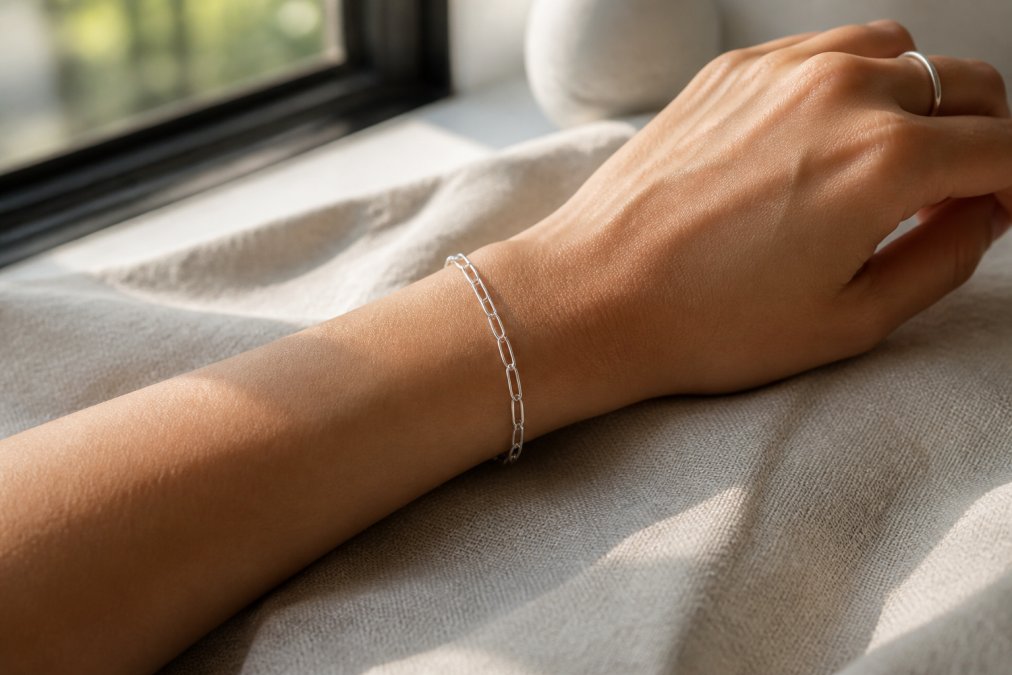
Sterling silver is the sweet spot for sensitive skin because it offers the durability of a precious metal without the high price tag of gold. It is naturally nickel-free, making it a safe choice for most people with metal allergies. The key is to ensure you are buying 925 sterling silver rather than silver-plated items, which can have a base metal core.
For an everyday piece that you never have to take off, consider the Sterling Silver Star Lariat Necklace at $58.00. It is handcrafted from sterling silver and zirconia stones, offering a subtle sparkle that works from the office to an evening out. If you prefer a statement on your wrist, the Best Selling Sterling Silver Chain Link Bracelets at $85.00 features a classic pave cuban chain design that is both durable and elegant. These pieces are water-safe and tarnish-resistant with proper care, meaning you can wear them through your daily routine without worrying about skin irritation.
Caring for Your Sensitive-Skin Jewelry (So It Lasts)
Even the best affordable jewelry for sensitive skin requires a little care to maintain its finish and prevent the buildup of skin oils and lotions that can dull the metal. The goal is to keep the metal clean and dry to prevent any potential irritation from accumulated residue. A simple routine will extend the life of your pieces significantly.
Follow these steps to keep your sterling silver looking its best:
- Clean gently: Use a soft, lint-free cloth to wipe down your jewelry after each wear. This removes sweat, perfume, and oils that can cause tarnishing.
- Wash occasionally: For a deeper clean, use mild dish soap and warm water. Rinse thoroughly and dry completely with a soft cloth.
- Store separately: Keep pieces in a dry, airtight bag or a jewelry box with anti-tarnish strips. This prevents scratching and slows down the oxidation process.
- Apply products first: Always put on lotion, sunscreen, and perfume before your jewelry. Let these products dry completely before putting on your pieces.
Why Residue Buildup Causes Irritation (Not Just Tarnish)
Most care guides focus on tarnish, but for sensitive skin, the bigger issue is residue buildup. Over time, a film of dead skin cells, fatty acids from sebum, and residual lotion accumulates on the metal's surface. This film can trap moisture against your skin and create a breeding ground for irritation, causing a friction rash or contact dermatitis mistakenly attributed to the metal itself.
A common pattern is that a piece feels fine for months, then suddenly starts causing itching. The metal hasn't changed; the accumulated biofilm on its surface has. This is why regular cleaning is not just about aesthetics, it is a direct method of preventing skin reactions.
The 'Deep Clean' Protocol for Reactive Skin
For those with a history of reactions, a weekly deep clean is recommended, not just a wipe-down. Here is a protocol that goes beyond the basics:
- Soak: Fill a small bowl with warm water and add a drop of mild, fragrance-free dish soap (e.g., Dawn). Soak the piece for 5-10 minutes to break down oils.
- Brush: Use a soft-bristled baby toothbrush to gently scrub crevices and chain links. This physically removes the biofilm that a cloth cannot reach.
- Rinse and Dry: Rinse thoroughly under warm running water and pat dry with a fresh, lint-free cloth. Ensure the piece is completely dry before wearing or storing.
- Polish: Use a jeweler's polishing cloth to restore shine and remove any light tarnish.
Upcycling and Repair: Extending the Life of Your Safe Metals
Solid metal pieces are an investment and can last a lifetime with proper care, but they are not immune to wear. Clasps can weaken, prongs can loosen, and chains can kink. A loose prong can create a sharp edge that rubs against your skin and causes mechanical irritation, often misdiagnosed as an allergy.
Instead of replacing a damaged piece, consider a repair. A local jeweler can typically re-tip a prong, replace a worn clasp, or re-solder a broken chain for a modest fee, often between $20 and $50 for simple repairs. This is not only more affordable than buying a new piece, but it also ensures you keep wearing the exact metal that your skin has already tolerated.
For plated pieces that have worn down, do not attempt to re-plate them at home. Instead, take them to a professional jeweler who offers rhodium or gold re-plating services. This can restore the protective layer and make the piece wearable again, but it is only worth doing if the base metal is nickel-free. If the base is brass or copper, re-plating is a temporary fix at best.
Frequently Asked Questions
Is sterling silver good for sensitive skin?
Yes, 925 sterling silver is one of the safest choices for sensitive skin, provided it is nickel-free. Gemma Azzurro crafts all sterling silver pieces without nickel. Look for hallmarked 925 silver to confirm purity. Avoid silver-plated items, as the base metal underneath is often a nickel alloy that can trigger reactions once the plating wears away.
What is the best metal for earrings if you have sensitive ears?
Implant-grade titanium, 14k or 18k gold, platinum, and nickel-free 925 sterling silver are the best metals for sensitive ears. These materials are biocompatible and do not release nickel ions when exposed to sweat or moisture. For affordable everyday earrings, choose solid sterling silver studs like Gemma Azzurro's emerald or moissanite options, which are crafted without nickel and feature push-back backs that avoid irritating the earlobe.
Does gold-plated jewelry cause allergic reactions?
Gold-plated jewelry can cause allergic reactions if the base metal contains nickel and the plating is thin or damaged. The gold layer itself is hypoallergenic, but it wears away with daily use, exposing the metal underneath. For sensitive skin, choose pieces with a thick gold plating over sterling silver, or opt for solid 14k gold. Gemma Azzurro gold-plated styles use a high-quality sterling silver base to minimize reaction risk.
How can I tell if jewelry is hypoallergenic?
Check the product description for terms like 'nickel-free,' 'hypoallergenic,' or 'medical-grade.' Confirm the specific metal used: 925 sterling silver, 14k or 18k gold, platinum, and titanium are safe bets. Avoid vague labels like 'metal alloy' or 'base metal.' Reputable brands like Gemma Azzurro state their materials clearly and offer a money-back guarantee, giving you confidence to test pieces without risk.
What affordable jewelry brands are best for sensitive skin?
Look for brands that specialize in solid sterling silver and clearly label their pieces as nickel-free. Gemma Azzurro offers a range of affordable sterling silver earrings, necklaces, and bracelets starting at $58, all handcrafted without nickel. Their pieces are designed for everyday wear and come with a 14-day money-back guarantee, making them a safe, budget-friendly choice for sensitive skin.
This article was written using GrandRanker


