
Table of Contents
- Sterling Silver vs Gold Plated: Quick Comparison
- Understanding Sterling Silver Composition
- What Is Gold Plated Jewelry and How It's Made
- Does Gold Plated Jewelry Tarnish Over Time
- Durability and Daily Wear Considerations
- Skin Sensitivity and Hypoallergenic Properties
- Sterling Silver vs Gold Vermeil: What's the Difference
- How to Clean Sterling Silver Jewelry at Home
Last Updated: August 25, 2026
Sterling Silver vs Gold Plated: Quick Comparison
Sterling silver is a precious metal alloy containing 92.5% pure silver mixed with base metals like copper, creating a durable material that develops character over time. Gold plated jewelry features a thin layer of gold electroplated over a base metal or sterling silver core, offering the appearance of solid gold at a fraction of the cost.

The real question isn't which is objectively better, but which fits your lifestyle. Sterling silver offers longevity and the ability to be restored through polishing, while gold plating provides immediate luxury aesthetics with lower upfront investment.
| Material | Composition | Durability | Best For | Maintenance |
|---|---|---|---|---|
| Sterling Silver | 92.5% pure silver + base metals | Excellent, lasts decades | Long-term wear, heirlooms | Regular polishing |
| Gold Plated | Thin gold layer over base metal | Good for 1-3 years with care | Fashion-forward daily wear | Gentle cleaning, avoid moisture |
Understanding Sterling Silver Composition
Sterling silver is defined by a specific standard: 925 parts per thousand of pure silver, with the remaining 75 parts made up of other metals, typically copper (the FTC). This alloy composition creates a metal that's both beautiful and practical for daily wear.
The copper content gives sterling silver strength, but it also causes tarnish. When exposed to air and moisture, the copper oxidizes, creating a dark patina. This isn't damage, it's a natural chemical reaction that protects the silver underneath and can be polished away completely.
What makes sterling silver exceptional for daily wear is its repairability. Unlike gold plated jewelry, which cannot be restored once the plating wears through, sterling silver can be refinished indefinitely. A tarnished piece can be polished back to brilliant shine in minutes. This longevity is why sterling silver pieces become heirlooms, they genuinely can last a lifetime with basic care.
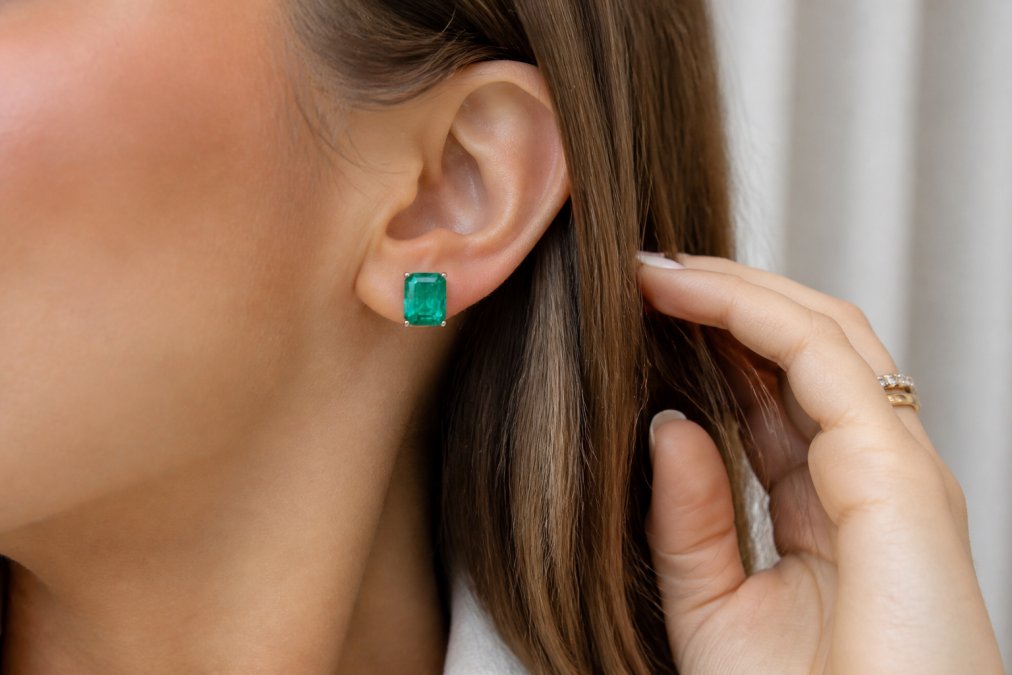
Sterling silver is marked with the 925 hallmark, your guarantee of composition. At Gemma Azzurro, our sterling silver pieces like the emerald green large rectangular stud earrings carry this hallmark.

What Is Gold Plated Jewelry and How It's Made
Gold plated jewelry is created through electroplating, where a thin layer of gold is electrically bonded to a base metal substrate. The base metal is typically brass, copper, or sterling silver. The thickness of the gold plating, measured in microns, directly determines how long it lasts under daily wear.
The electroplating process suspends the jewelry in a solution containing gold ions and runs an electrical current through it. The gold ions bond to the base metal, creating a permanent molecular bond far stronger than simple surface coating.
Quality gold plated jewelry typically has 2.5 to 5 microns of gold plating (the FTC). Anything less than 1.5 microns will wear through quickly with daily contact. The base metal matters enormously, if it's sterling silver, the piece can be re-plated if needed. If it's brass or copper, re-plating becomes less practical. Gemma Azzurro's gold plated pieces, including the 18k gold plated silver dangling eye huggie hoops, use sterling silver bases for durability.
Does Gold Plated Jewelry Tarnish Over Time
Gold plated jewelry doesn't tarnish in the traditional sense, but the base metal underneath can. If the gold plating develops scratches or wear spots, the exposed base metal will oxidize and create dark marks showing through the gold.
The real enemies of gold plated jewelry are moisture and friction. Sweat, shower water, and chlorine accelerate plating breakdown. Friction from clothing and daily activity gradually wears the plating thinner. After 1-2 years of consistent daily wear, most gold plated jewelry shows visible wear. After 3 years, the plating often becomes noticeably thin or patchy.
Sterling silver, by comparison, develops tarnish but never loses its structural integrity. You can wear sterling silver every day for decades, while it may tarnish, it remains a solid, repairable metal. This is the fundamental difference: gold plating is a surface treatment with a defined lifespan, while sterling silver is a material that lasts indefinitely.
Durability and Daily Wear Considerations
Durability for daily wear depends on both material and construction. Sterling silver is inherently more durable because it doesn't have a "wear layer" that depletes. The metal itself withstands regular contact, sweat, and environmental exposure. Sterling silver jewelry can be worn swimming, showering, and during workouts. It will tarnish, but it won't deteriorate.
Gold plated jewelry requires more intentional care. Removing it before showering or swimming extends its lifespan significantly. Avoiding direct contact with lotions, perfumes, and cosmetics reduces surface wear.
Construction quality matters as much as material. Look for solid construction, secure stone settings, and reinforced connection points. Gemma Azzurro's pieces, like the sterling silver gold plated tear drop dangling huggie earrings, use sturdy construction designed for daily wear.

Consider your actual lifestyle. Do you shower with jewelry on? Do you wear perfume or lotions that contact your jewelry? These factors matter more than material choice itself.
Skin Sensitivity and Hypoallergenic Properties
Sterling silver genuinely outperforms gold plated jewelry for people with sensitive skin. Sterling silver's hypoallergenic properties come from its composition: 92.5% pure silver is naturally resistant to causing allergic reactions.
Gold plating sits on top of a base metal. If that base is nickel, brass, or copper, and the plating wears through or develops microscopic gaps, your skin contacts the base metal directly. Nickel allergies are common and cause itching, redness, and sometimes blistering. A piece can look fine while the plating has developed tiny cracks invisible to the eye.
If you have sensitive skin or a known metal allergy, sterling silver is the safer choice. It's consistently hypoallergenic across its entire surface. For people without metal sensitivities, gold plated jewelry over sterling silver is generally safe, since the sterling silver base means you're contacting silver if the plating wears.

Sterling Silver vs Gold Vermeil: What's the Difference
Gold vermeil is often confused with gold plating, but it's a distinct category with specific legal requirements. In the United States, gold vermeil must have a sterling silver base, gold plating at least 2.5 microns thick, and gold at least 10 karat (the FTC).
This means gold vermeil is high-quality gold plating on a sterling silver base. It's thicker and more durable than typical gold plating, which might be only 0.5 to 1 micron over brass. Because the base is sterling silver, gold vermeil pieces can theoretically be re-plated indefinitely.
Gold vermeil still has the fundamental limitation of any plated jewelry: the plating will eventually wear with daily wear. The thicker plating means it lasts longer, potentially 3-5 years instead of 1-2 years, but it's not permanent. Sterling silver is permanent and requires no replating.
Think of it this way: sterling silver is an investment in permanence, while gold vermeil is an investment in durability with eventual maintenance.
How to Clean Sterling Silver Jewelry at Home
Sterling silver tarnish removal is straightforward. Mix baking soda with a small amount of water to create a thick paste. Using a soft cloth or soft-bristled toothbrush, gently rub the paste onto tarnished areas in circular motions. Rinse thoroughly with lukewarm water and dry immediately with a clean cloth.
For pieces with intricate details or gemstones, use a gentler approach. Make a solution of warm water and a few drops of mild dish soap. Soak the jewelry for 5-10 minutes, then use a soft toothbrush to gently clean crevices. Rinse thoroughly and dry completely.
Avoid commercial silver polish products with harsh chemicals, which can damage gemstones. Never use abrasive scrubbing pads or steel wool, as these scratch the surface.
Prevention is easier than removal. Store sterling silver jewelry in airtight containers or sealed plastic bags when not wearing it. Individual pouches prevent pieces from scratching each other. Keep jewelry away from direct sunlight and extreme temperature changes.
For pieces from Gemma Azzurro like the silver gold plated baguette hoops, use the mild soap solution rather than baking soda paste to protect the plating.
Choosing between sterling silver vs gold plated for daily wear depends on your lifestyle and what you want from your jewelry. Sterling silver offers permanence, it lasts decades and can be restored infinitely, making it ideal for pieces you plan to wear forever. Gold plated jewelry offers immediate luxury and lower cost, perfect for fashion-forward pieces you'll rotate seasonally.
Gemma Azzurro specializes in both materials because different pieces serve different purposes. Whether you choose our sterling silver emerald studs for lasting everyday elegance or our 18k gold plated huggie hoops for versatile style, our pieces are designed to last. Every collection features high-quality construction, hypoallergenic materials, and durability that makes jewelry worth wearing. With our 14-day money-back guarantee and free shipping on orders over $150, you can invest in pieces you'll actually love wearing every single day.
Frequently Asked Questions
Will sterling silver tarnish if I wear it every day?
Sterling silver will oxidize and develop a patina over time, especially with daily wear and exposure to air, moisture, and skin acidity. However, regular wear actually slows tarnishing because friction helps maintain the surface shine. The tarnish is not permanent damage, you can remove it by cleaning with a soft cloth or gentle silver cleaner. Many people find that 925 sterling silver develops a beautiful patina that adds character to everyday pieces.
Is gold plated jewelry good for everyday wear?
Gold plated jewelry can work for daily wear if the plating is thick enough (typically 2.5 microns or more) and the base metal is durable, like 925 sterling silver. However, gold plating will wear away gradually with daily use, perspiration, and friction. Huggie hoops and stud earrings tend to hold up better than dangling pieces. Once the plating wears through, you'll see the base metal underneath. For long-term everyday wear, sterling silver alone or gold vermeil (thicker plating) may be more practical.
Does sterling silver turn your skin green?
Pure sterling silver (925 silver) does not turn your skin green. Green discoloration typically comes from copper or other base metals in lower-quality alloys reacting with skin acidity and moisture. Sterling silver contains 92.5% pure silver and 7.5% other metals (usually copper), but the copper content is minimal and bonded in a way that prevents the reaction. If you're prone to green marks from jewelry, genuine 925 sterling silver is a safer choice than gold plated pieces with cheaper base metals.
How long does gold plating last over sterling silver?
The lifespan of gold plating depends on thickness and wear patterns. Standard plating (0.5 to 2.5 microns) typically lasts 6 months to 2 years with daily wear. Thicker plating (2.5 microns or more) can last 3-5 years. Factors that accelerate wear include frequent hand washing, swimming, perfume, and friction from clothing or other jewelry. Pieces worn occasionally last much longer than daily-wear items. Once plating wears away, you can have the piece replated, though this adds to the total cost over time.
What's the difference between gold plated and gold vermeil jewelry?
Both gold plated and gold vermeil start with a base metal and a gold coating, but vermeil has stricter requirements: the base must be sterling silver (925 silver), and the gold plating must be at least 2.5 microns thick. Gold plated jewelry can use any base metal and may have thinner plating. Because vermeil has a thicker, more durable coating over higher-quality sterling silver, it typically lasts longer for daily wear. Vermeil pieces often cost more but offer better longevity, making them a better investment if you want everyday jewelry that won't wear through quickly.
This article was written using GrandRanker


