
Table of Contents
- Can You Wear Gold-Plated Jewelry in the Shower?
- What Is Gold Vermeil vs Gold-Plated Jewelry
- Why Water Damages Gold-Plated Jewelry
- How to Clean Gold-Plated Jewelry After Water Exposure
- Gold-Plated Jewelry Care Tips for Daily Wear
- Signs Your Gold-Plated Jewelry Is Losing Its Coating
- Can You Repair or Re-Plate Gold-Plated Jewelry?
- Conclusion
Last Updated: August 26, 2026
Can You Wear Gold-Plated Jewelry in the Shower?
The short answer is no, you shouldn't wear gold-plated jewelry in the shower. Water, soap, and humidity accelerate damage to the delicate gold plating. At Gemma Azzurro, we're passionate about helping you keep your gold-plated jewelry looking vibrant and lasting for years.
Gold-plated jewelry is engineered for everyday elegance, but the shower presents a perfect storm of moisture, temperature changes, and chemical exposure that strips away the protective gold coating far faster than normal wear. Whether you own a pair of our 18k gold plated silver eye huggie hoops or a delicate dangling piece, the same care principles apply.

What Is Gold Vermeil vs. Gold-Plated Jewelry
Gold vermeil and gold-plated jewelry are often confused, but they're distinctly different products with different durability profiles.
Gold-Plated Construction
Gold-plated jewelry consists of a thin layer of gold bonded to a base metal, typically brass, copper, or nickel, through electroplating. The gold coating is typically between 0.5 and 2.5 microns thick. A human hair is roughly 70 microns in diameter, making the gold layer about 1/30th the thickness of a hair.
This thinness is why gold-plated jewelry requires careful handling. The base metal underneath will eventually show through as the gold coating wears away, causing discoloration or skin sensitivity if the base metal contains nickel.
The advantage of gold-plated jewelry is affordability and aesthetic appeal. You get the look of solid gold at a fraction of the cost. Pieces like our 18k gold plated silver dangling eye huggie hoops deliver Mediterranean luxury without the premium price tag of solid gold.
Gold Vermeil Construction
Gold vermeil is a stronger alternative to standard gold plating. Vermeil pieces must have a sterling silver base (925 silver) and a gold coating of at least 2.5 microns thick according to federal regulations (the FTC). The sterling silver foundation is significantly more durable and resistant to corrosion than brass or copper, so the piece maintains its integrity longer even as the gold layer gradually wears.
Because of the sterling silver base, vermeil pieces last longer and resist tarnishing better than gold-plated pieces on brass bases. Even if the gold eventually wears through, you're left with an attractive silver piece rather than discolored or damaged jewelry.
Solid Gold vs. Gold-Filled
Solid gold jewelry contains 14K, 18K, or higher gold content throughout and is the most durable option. It won't tarnish or corrode, though it's also the most expensive. Gold-filled jewelry consists of a thick layer of gold (at least 5% of total weight) bonded to a base metal core. Gold-filled pieces are significantly more durable than gold-plated jewelry and typically last 10-30 years with proper care, compared to 1-3 years for gold-plated pieces.
Why Water Damages Gold-Plated Jewelry
Water doesn't directly damage gold, the metal is chemically inert. What water does is accelerate processes that degrade the protective gold coating and expose the vulnerable base metal underneath.
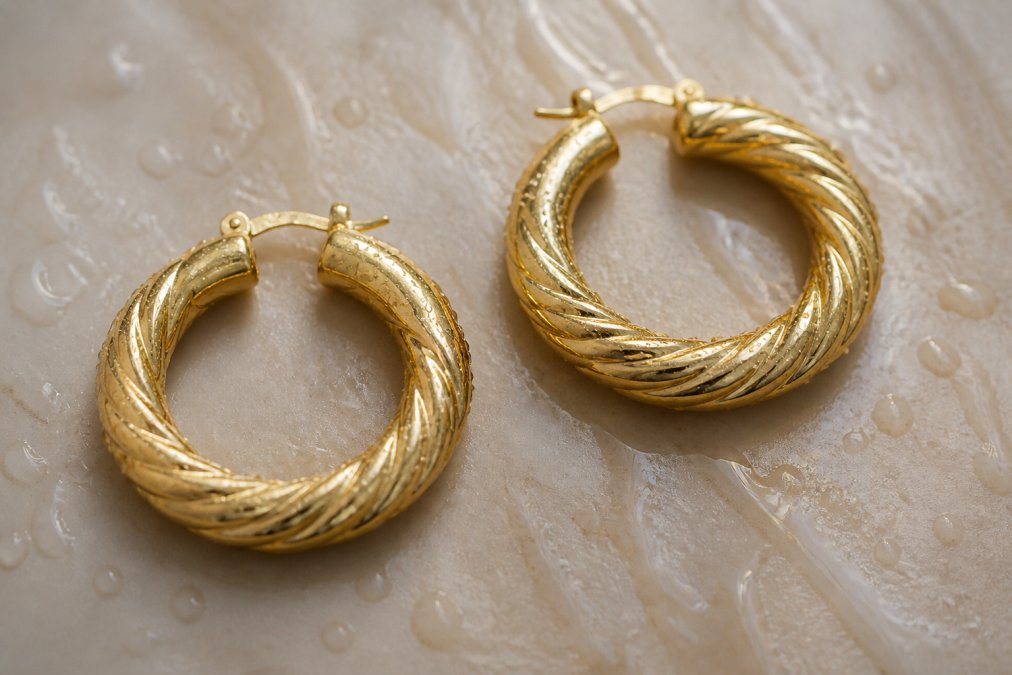
When you expose gold-plated jewelry to water, moisture penetrates microscopic gaps in the gold layer and triggers oxidation of the base metal. This weakens the bond between the gold coating and the base, causing the gold to flake or peel away.
Soap compounds the problem. Most soaps are slightly alkaline and interact with both the gold layer and base metal, accelerating corrosion. Hot water accelerates these chemical reactions further. The combination of heat, moisture, and soap creates optimal conditions for deterioration.
Humidity plays an underestimated role. Even stored in a bathroom, the steam and moisture gradually degrade gold-plated jewelry. Repeated expansion and contraction of the base metal as it heats and cools stresses the gold coating until it cracks or peels.
The American Chemical Society's research on metal corrosion explains that moisture exposure dramatically increases the rate at which base metals oxidize. For gold-plated pieces with brass or copper bases, this oxidation creates green or black discoloration that eventually shows through the gold layer.
How to Clean Gold-Plated Jewelry After Water Exposure
If your gold-plated jewelry gets wet, the key is to dry it immediately and thoroughly. Lingering moisture is the enemy.
Gently pat the piece dry with a soft, lint-free cloth. Microfiber cloths work exceptionally well because they absorb moisture without scratching the delicate gold surface. Pay special attention to crevices and settings.
For pieces exposed to soapy water, rinse gently with distilled water (not tap water, which contains minerals) and dry immediately. Never use hot water.
If you notice residue, create a gentle cleaning solution by mixing mild dish soap with distilled water. Dip a soft cloth into the solution and gently wipe the jewelry. Rinse with distilled water and dry immediately.
Never use abrasive cleaners, toothbrushes, or scrubbing motions on gold-plated jewelry. Avoid ultrasonic cleaners and steam cleaning machines, as vibrations and heat damage the plating.
The Smithsonian Institution's jewelry care guidelines recommend storing cleaned jewelry in a dry environment and avoiding prolonged moisture exposure.
Gold-Plated Jewelry Care Tips for Daily Wear
Wearing gold-plated jewelry daily is possible with intentional habits. The goal is to minimize exposure to moisture, chemicals, and friction.
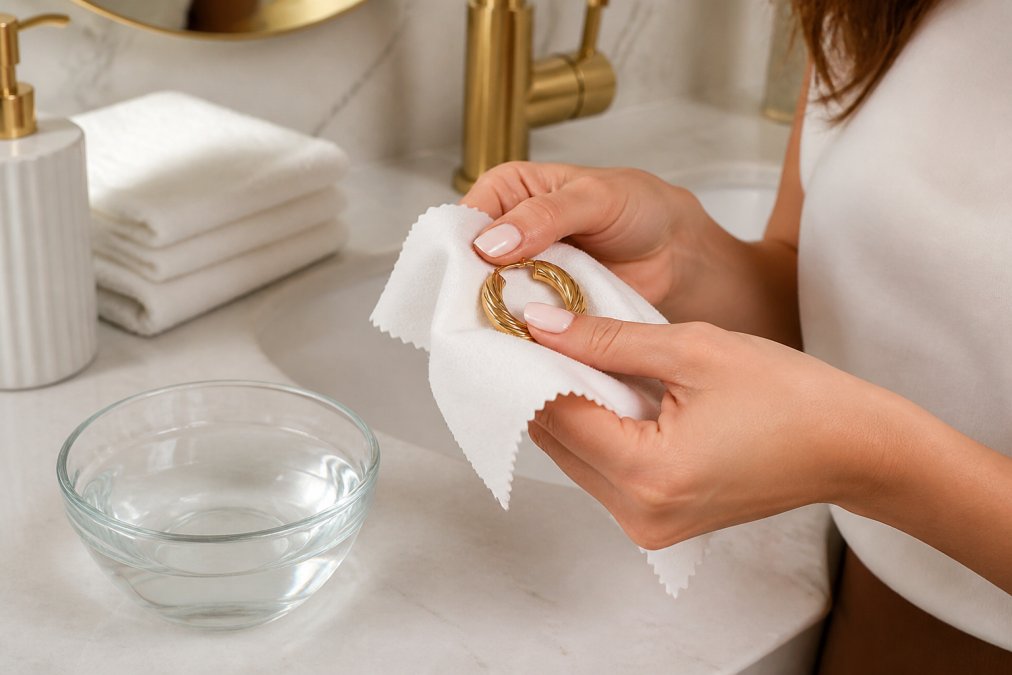
Remove your jewelry before showering, bathing, swimming, or any water activity. This is the single most important habit. Make it routine: jewelry off before water exposure, every time.
Remove your jewelry before applying lotions, perfumes, or cosmetics. These products contain oils and alcohol that accelerate degradation. Apply these products first, let them dry, then put on your jewelry.
Avoid wearing gold-plated jewelry during exercise or activities that cause sweating. Sweat contains salts and acids that corrode the base metal. If you want to wear jewelry during workouts, choose solid gold or gold-filled pieces instead.
Be mindful of friction. Gold-plated jewelry worn against rough fabrics or textured surfaces wears faster. Delicate pieces benefit from being worn over clothing rather than directly against skin during active days.
Storage Best Practices
Store pieces in a cool, dry location away from direct sunlight. Humidity and temperature fluctuations accelerate oxidation of the base metal.
Individual storage pouches or small boxes lined with soft cloth prevent pieces from rubbing against each other. Never store gold-plated jewelry in a bathroom, where humidity is constant. A bedroom drawer or jewelry box in a climate-controlled room is ideal.
Avoid storing gold-plated jewelry with other metals, especially silver or copper pieces, which can react and cause discoloration or corrosion.
Chemical Exposure Prevention
Chlorine in pools and hot tubs is particularly damaging, it reacts directly with the gold coating and base metal. Never wear gold-plated jewelry in chlorinated water.
Cleaning products, laundry detergents, and household chemicals should trigger jewelry removal. Many contain alkaline compounds or strong oxidizing agents that damage gold plating.
Sunscreen and insect repellent also warrant removal. Hand sanitizer and alcohol-based products are surprisingly damaging to gold plating. The alcohol can dissolve protective oils and interact with the base metal.
Signs Your Gold-Plated Jewelry Is Losing Its Coating
Discoloration is often the first visible sign. A greenish or reddish tint (if the base is brass or copper) or grayish appearance (if nickel) indicates the gold layer is thinning.
Flaking or peeling gold is an obvious sign the plating is failing. Once flaking starts, it typically accelerates.
A dull or faded appearance indicates wear. Gold-plated jewelry should maintain a lustrous shine. If your piece looks increasingly dull, the gold layer is wearing away.
Rough or pitted texture on the surface suggests corrosion of the base metal is beginning. Any roughness indicates moisture has penetrated the gold layer.
Skin irritation or discoloration where the jewelry touches can signal the gold plating has worn through. This is your signal to stop wearing the piece or have it re-plated.
Can You Repair or Re-Plate Gold-Plated Jewelry?
Yes, gold-plated jewelry can be re-plated. A jeweler can typically re-plate a piece for $25 to $100, depending on size and complexity.
The question is whether re-plating makes financial sense. If you paid $35 for gold-plated hoops, re-plating for $50 doesn't make sense. However, if the piece has significant sentimental value, re-plating can extend its life substantially.
Before re-plating, consider whether the base metal is still in good condition. If it has corroded significantly, re-plating might not hold well.
An alternative is upgrading to gold-filled or vermeil jewelry. These pieces last significantly longer, typically 10-30 years with proper care, compared to 1-3 years for standard gold-plated jewelry.
At Gemma Azzurro, our commitment to quality means we design pieces built for durability. Our 18k gold plated silver pieces combine the aesthetic appeal of gold plating with the longevity of sterling silver bases, giving you jewelry that maintains its beauty through years of daily wear when properly cared for.

Conclusion
Gold-plated jewelry requires intentional care, but it's absolutely wearable for everyday life, just not in every environment. The shower is one environment where you should remove it. Water, soap, humidity, and temperature fluctuations accelerate degradation far faster than normal wear.
The key is simple: remove your gold-plated jewelry before water exposure, store it in a cool and dry location, and minimize contact with chemicals and moisture. By following these practices, pieces like our 18k gold plated silver dangling eye huggie hoops will maintain their vibrant finish and beauty for years.
| Care Practice | When to Apply | Expected Benefit |
|---|---|---|
| Remove before showering | Every shower | Prevents moisture damage to plating |
| Dry immediately if wet | Within minutes of water exposure | Stops oxidation of base metal |
| Store in cool, dry location | Between wearings | Reduces humidity-related corrosion |
| Remove before chemicals | Before cosmetics, cleaning products | Prevents chemical interaction with coating |
| Separate from other metals | During storage | Prevents metal-to-metal corrosion |
Keeping gold-plated jewelry looking beautiful requires protecting it from moisture and chemicals, but that doesn't mean you can't wear it daily. Get started with Gemma Azzurro's collection of 18k gold plated silver pieces, each crafted with high-quality sterling silver bases and designed specifically for long-lasting everyday wear. With our 14-day money-back guarantee, free shipping on USA orders over $150, and pieces engineered to withstand daily life when properly cared for, you'll have jewelry that stays vibrant and beautiful for years.
Frequently Asked Questions
What happens if gold-plated jewelry gets wet?
Water accelerates oxidation and corrosion of the base metal beneath the gold plating. Moisture seeps through microscopic gaps in the coating, causing the underlying copper or brass to tarnish and discolor. This process is especially rapid with hot water and soap residue, which lower the pH balance and increase chemical exposure. The protective coating gradually fades and can flake off, exposing the base metal and potentially causing skin irritation.
How long will gold-plated jewelry last if exposed to water regularly?
Gold-plated jewelry typically lasts 6 to 18 months with regular water exposure, depending on plating thickness and base metal quality. High-quality pieces like Gemma Azzurro's 18k gold-plated sterling silver hoops last longer because sterling silver resists corrosion better than brass or copper bases. However, frequent showering, swimming, or exposure to chemicals accelerates fading and discoloration. Limiting water contact to occasional splashes and drying immediately extends the lifespan significantly.
What kind of gold jewelry is safe to wear in the shower?
Solid gold (10k, 14k, or 18k) and gold vermeil over sterling silver are safe for shower wear. Solid gold doesn't tarnish or corrode because it's pure gold throughout. Gold vermeil features a thicker gold coating (at least 2.5 microns) over sterling silver, which resists water damage better than standard gold plating. Gold-filled jewelry is also shower-safe because it contains a substantial layer of gold bonded to the base. Standard gold-plated jewelry with thin coatings should be removed before showering.
Does soap and shampoo damage gold plating?
Yes, soap and shampoo damage gold plating by lowering the pH balance around the jewelry and leaving residue that traps moisture against the coating. Abrasive cleaners and harsh chemicals accelerate the breakdown of the electroplating bond, causing discoloration and flaking. Even gentle soaps create a film that holds water in contact with the base metal, speeding oxidation and corrosion. This is why removing gold-plated pieces before washing is essential for long-lasting durability.
This article was written using GrandRanker


